Rucksacks come in all shapes and sizes. Some have one main compartment with a lid; others have zips everywhere, with extra pockets on the front, sides or hip belt.
The principle is the same: pack so everything is easy to reach when you need it. If you're stopping for lunch, you don't want your food at the bottom under your sleeping bag.
With thought and practice you'll become an expert on your own rucksack. When you buy a new one you'll have to work it out again, but experience will help you make the most of its design.
A few hints
- Don't go cheap. Along with footwear and waterproofs, buy the best you can afford.
- Make sure it fits you.
- Lots of zips, straps and pockets mean more to break. Simple and sturdy is better.
- Practise putting it on and taking it off safely. Put it down with care; don't drop it.
- Make sure it has a rain cover, and use it.
- Attach items to the outside securely and neatly. No swinging bottles or mugs.
- If you sit on it, remember what's inside.
- Double-bag liquid fuel and rubbish.
- Belt buckles are fragile and essential. Many have been trodden on and broken.
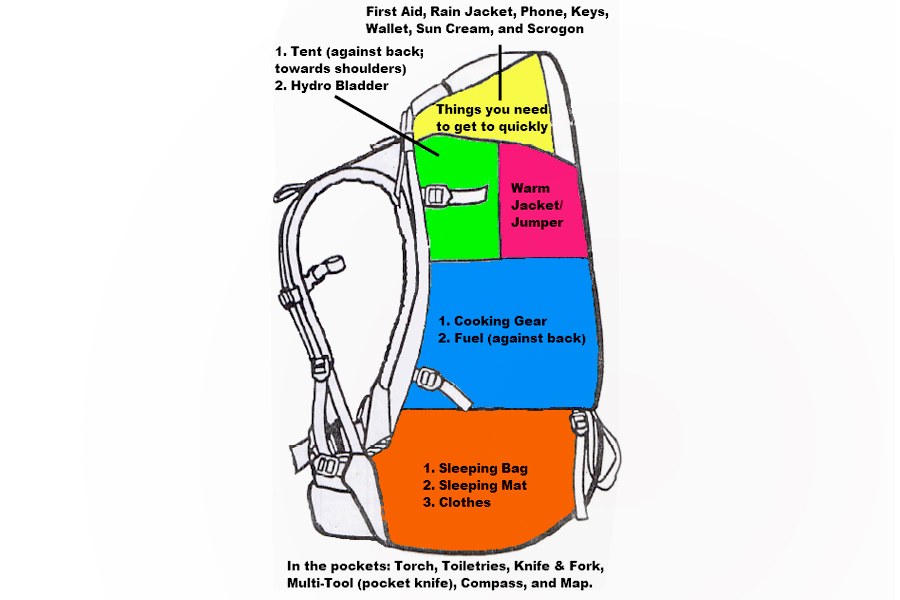 Rucksack packing example
This is an example, not the only way. It shows the general idea. Practise, experiment and refine.